
The gatekeepers of your health: how nutrition actually reaches your cells
In the previous blog post I shared the progress Haro has made, he's finally gaining weight again and has the energy to be physically active, with enough moments of rest during the day.
The key? We stopped focusing only on "eating more" and started working on improving the flexibility of the cell membranes. But how does that actually work in your body?
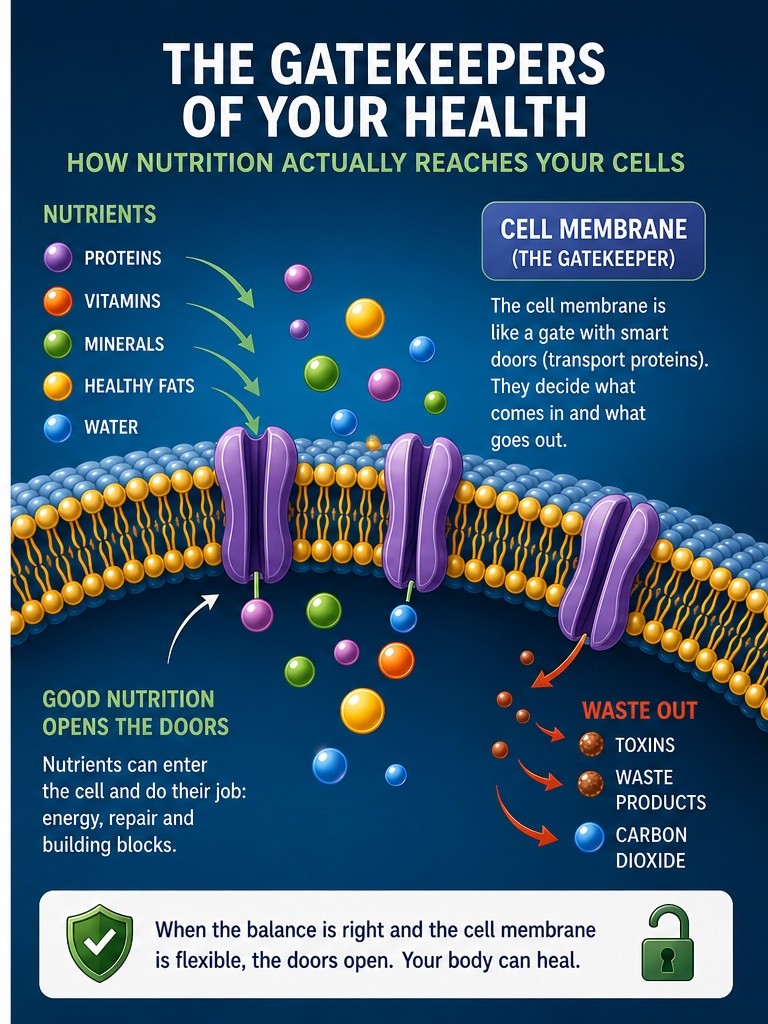
Imagine your cell as a house
Your cell membrane is the outer wall of that house. In a healthy situation, that wall isn't made of concrete, it's more like a flexible curtain. It contains special "doors" (transport proteins) that allow nutrients to enter and waste products to leave.
Is Omega-6 the "bad guy"?
Not at all. Omega-6 is an essential fatty acid that we need for our internal "fire brigade". It helps your body initiate an inflammatory response to fight bacteria or heal a wound. The problem is not omega-6 itself, it's the excess of it in our modern diet.
Why is the 3:1 ratio so important?
In orthomolecular biology, we aim for an Omega-6 to Omega-3 ratio of around 3:1 or lower. At this ratio, the cell membrane remains flexible; when the ratio increases (for many people it's 15:1 or even 25:1), the membrane becomes stiff and less permeable.
Omega-6 also acts like an "on" switch for inflammation, and Omega-3 like the "off" switch. With a balanced ratio, your body can complete the inflammatory process properly. If the ratio is too high, your body can get stuck in a chronic "on" state (low-grade inflammation), which blocks recovery.
The bodyguards: polyphenols
To get omega-3 into your cells, you also need polyphenols. These powerful antioxidants, for example from early harvest olive oil, act like bodyguards. They protect the delicate omega-3 fats from oxidation ("rusting"), so they can safely reach your cell membranes and do their job. Many omega-3 supplements contain little to no polyphenols and may even oxidize before you consume them, making them far less effective.
What happens when the door opens?
Only when the balance is restored and the "bodyguards" do their job, the transport channels open. Proteins, vitamins, and other nutrients you consume can finally enter the cell. Your body then receives the building blocks it needs for its remarkable self-healing ability.
It's a fascinating interplay of the right molecules in the right place, and creating the right conditions so your body can do what it's designed to do. In the next blog post I'll share another essential factor in this process: the role of your nervous system, rest, and my own journey from a maximum of 5 minutes of walking… to 10,000 steps a day.